Solar for Homes | 3kW Rooftop Solar Power by USL
We’re here to support your solar needs. Reach out to us for inquiries, quotes, or assistance in finding the best rooftop solar panel options for homes in India.
Contact usOur Install Solutions for Every Roof
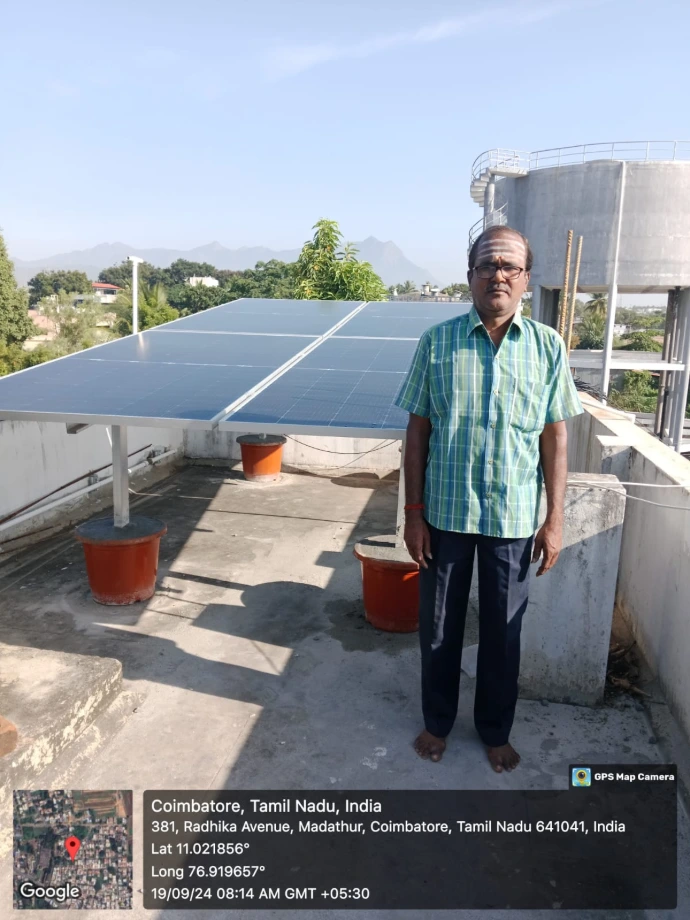
Max Power Mounting with Optimal Height Columns on RC-Roof
For bifacial solar panels, USL team typically install them 1 to 1.5 meters (3.3 to 5 feet) above the ground or roof. A standard baseline height of 42.5 inches (about 1.1 meters). It allows sufficient clearance for reflected light to reach the back of the panels.
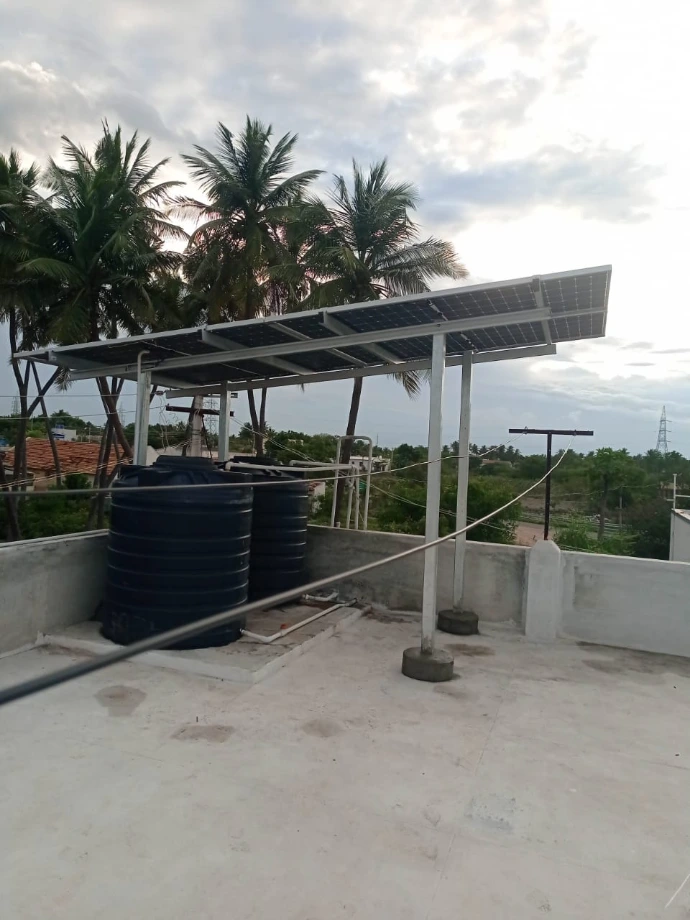
Space Saver Mounting with Elevated Height Columns on RC-Roof
Dual Use directly underneath the array while the panels create beneficial shade while generating power for limited space terrace houses.
At 2+ meters, unrestricted convective airflow cools the rear side of the module, resulting in higher overall energy yields in hot climates. Lighter surfaces (white paint on floor concrete, tiles) increase bifacial gains, making the mounting height highly impactful
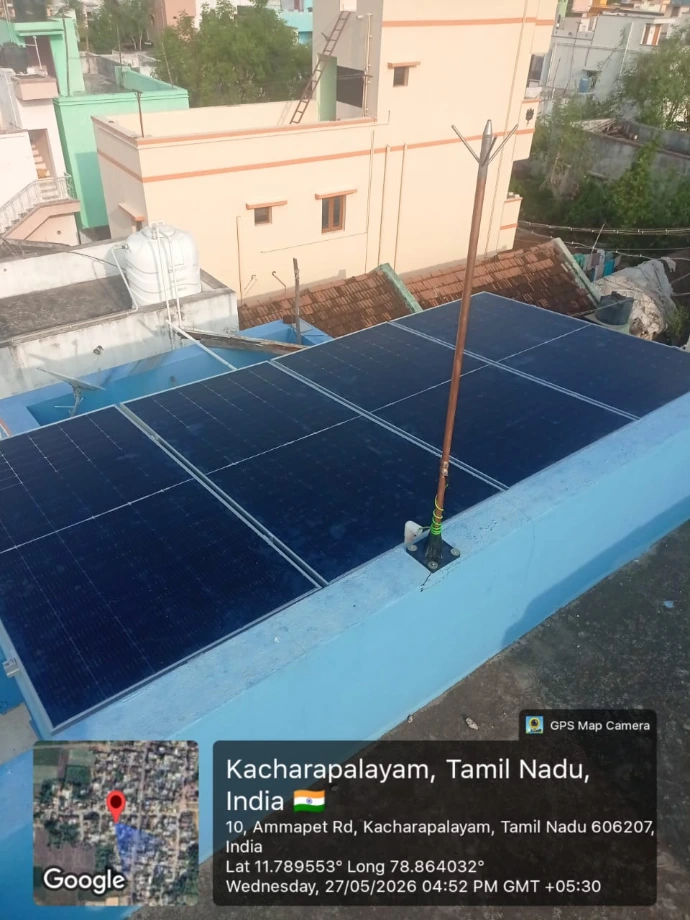
Sheet/Tile Roof Mount
USL roof mount structure provides better resistance to high winds, extreme temperatures, and mechanical stress while reducing degradation over time.
Bifacial panels rely on surface reflection. A light-colored or bright metallic sheet roof acts as a giant mirror, reflecting ambient and direct sunlight onto the backside of the panels.
Who Should Choose 3kW?
- A 3kW solar system costs ₹1,80,000–₹2,20,000 before subsidy and ₹102,000–₹1,32,000 after PM Surya Ghar subsidy of ₹78,000.
- It generates 12–15 units per day — India's most popular residential solar size, ideal for 2–3 BHK homes with monthly bills of ₹2,000–₹3,500.
- This is also the maximum subsidy-optimised size, as the ₹78,000 cap is reached at 3kW.
Space and Installation
- Panels: 6 × 540W~555W panels
- Roof area: ~300 sq ft (shadow-free)
- Weight: ~90–120 kg total
- Installation time: 1–2 days
- Orientation: South-facing, 10–15° tilt
- 300 sq ft is achievable on most independent house terraces. For apartments, it requires a cooperative society or individually allocated terrace space.
Subsidy and Payback Period
3kW maximises the PM Surya Ghar subsidy at ₹78,000:
- First 2kW: ₹30,000/kW = ₹60,000
- 3rd kW: ₹18,000/kW = ₹18,000
- Total: ₹78,000 (subsidy cap reached)
Payback calculation:
| Tariff | Net Cost | Annual Savings | Payback |
|---|---|---|---|
| ₹5/unit | ₹132,000 | ₹22,500 | ~4.1 years |
| ₹7/unit | ₹132,000 | ₹31,500 | ~2.9 years |
| ₹10/unit | ₹132,000 | ₹45,000 | ~2.0 years |
Most homes with ₹3,000+ monthly bills recover investment in under 3 years.
3kW Solar System Price Breakdown
| Component | Cost Range |
|---|---|
| Solar panels (6 × 540W~555W) | ₹50,000–₹68,000 |
| On-grid inverter (3kW) | ₹25,000–₹35,000 |
| Mounting structure | ₹10,000–₹15,000 |
| Wiring, protection, earthing | ₹8,000–₹10,000 |
| Installation labour | ₹6,000–₹10,000 |
| Net metering & DISCOM fees | ₹2,000–₹5,000 |
| GST (8.9%) | ₹16,000–₹21,000 |
| Total (before subsidy) | ₹1,80,000–₹2,20,000 |
| PM Surya Ghar subsidy | −₹78,000 |
| Net cost (after subsidy) | ₹102,000–₹1,32,000 |
The 3kW size maximises subsidy value: ₹30,000/kW for the first 2kW + ₹18,000/kW for the 3rd kW = ₹78,000 total. Beyond 3kW, no additional subsidy applies.
Daily and Monthly Output
| Period | Output | Bill Savings (at ₹6–₹10/unit) |
|---|---|---|
| Per day | 12–15 units | ₹72–₹150 |
| Per month | 360–450 units | ₹2,160–₹4,500 |
| Per year | 4,380–5,475 units | ₹26,280–₹54,750 |
For most 2–3 BHK homes consuming 300–450 units/month, a 3kW system offsets 80–100% of the electricity bill. You may end up paying only the fixed DISCOM charges (₹50–₹200/month).
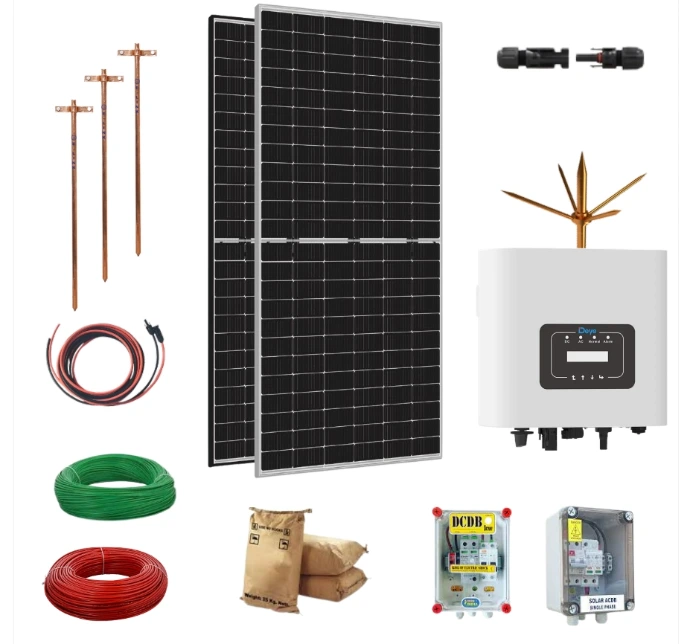
What Can a 3kW System Run?
A 3kW system handles a typical Indian household comfortably:
| Appliance | Wattage | Hours/day | Daily Units |
|---|---|---|---|
| LED lights (10) | 100W | 6 | 0.6 |
| Ceiling fans (4) | 280W | 10 | 2.8 |
| Refrigerator (260L) | 180W | 8 | 1.4 |
| TV (LED 50") | 100W | 5 | 0.5 |
| Washing machine | 500W | 1 | 0.5 |
| WiFi + laptop + phones | 100W | 8 | 0.8 |
| Mixer + iron (alternating) | 800W | 0.5 | 0.4 |
| Inverter AC (1 ton, limited) | 900W | 3 | 2.7 |
| Total | 9.7 units |
This leaves 2–5 units of daily surplus for net metering. The 3kW system can handle limited AC usage (3–4 hours/day) alongside other appliances. For heavy AC usage, consider 5kW.
3kW vs Other Sizes: Should You Go Bigger?
|
2kW |
3kW |
5kW |
|
|
Cost after subsidy |
₹50K–₹80K |
₹72K–₹1.12L |
₹1.72L–₹2.42L |
|
Daily output |
8–10 units |
12–15 units |
20–25 units |
|
Runs AC? |
No |
Limited (3–4 hrs) |
Yes (6–8 hrs) |
|
Bill range |
₹1K–₹2K |
₹2K–₹3.5K |
₹3.5K–₹6K |
|
Subsidy |
₹60,000 |
₹78,000 |
₹78,000 |
Rule of thumb: If your monthly bill is under ₹2,000, 2kW is the sweet spot. If it is ₹2,000–₹3,500, the extra ₹20,000–₹30,000 for 3kW is worth it because of the additional subsidy kW at ₹18,000/kW.
More Details" Excellent Work by the team from start to finish. Extremely Happy "

" Excellent Work by the team from start to finish. Extremely Happy "
" Prompt Service & Subsidy Credited. "

" Site Survey to Subsidy, all works done by USL-Team. "

Get Smart, Start Saving Your Electric Bills Today
Ready to embark on your electric power savings? Order now with our USL Sales Team